Philosophically, I find myself quite interested in the concept of composition, and more specifically the exact instance where something goes from being simply a collection to being “more than the sum of its parts.” This is a commonplace saying, yet I don’t think people examine just how often objects transcend their original makeup and gain this new quality. For instance, if you were to go on an art museum tour with a particularly insufferable friend, you may be the victim of hearing the complaint that “these sculptures are so easy to build, even I could’ve done them!” Of course, this opinion has been uttered an uncountable number of times, and the seemingly correct rebuttal would be something akin to “but no one before the artist thought to actually do it, and that’s exactly why this piece is interesting.” That is, the content of the actions needed to create are not the entire picture; the context of why those actions are being taken also contributes to the identity of the created work.
In the same way, it is not inherently “interesting” that a tree grows over hundreds of decades and is composed of leaves and interlocking cellular structure. But to us, the observers of the tree, it may be interesting when compared to other trees of similar yet different species, because those differences give rise to our definition of what a tree is. The same base components of what makes a tree may exist in both trees, but the way those components are used are different and so we ascribe the qualities of the two trees as “different.” Every time a tree is born, it is subjected to its own unique combination of weather conditions, external actors, locational qualities, and air chemistry makeup. No two trees are the same, so each tree is unique and interesting.
But in these two rather extreme cases, it begs the question: at what point do the differences in objects go from minute details to genre-defining qualities? Obviously, humans have a remarkable talent for endlessly subdividing groupings until there can be no more division because every subcomponent is identical, as with the atomic model. But it feels a bit too arbitrary to just decide that every individual object is special in its own way, and therefore everything deserves equal attention and fascination. This line of distinction where categorization is defined seems to vary from person to person and is entirely determined by the time and place that anyone is asked to define it. With a consensus seemingly impossible to reach, it may be worthwhile to again examine the case for everything being special.
To return to art history, another tired story is that of the Luddites and their culture of pure craft they helped establish. As textile manufacturing was being revolutionized by automated machinery, traditional craftsmen banded together and vehemently fought for their right to continue working in the traditional handmade style. Obviously, this was a battle already lost by the forces of the market and time, but the culture persists with each new revolutionary technology. In the same way, many cartoon animators were either skeptical or directly opposed to computed generated graphics when software was being introduced to the public in the 1990’s, and eventually almost all large commercial endeavors done today are completed without a single hand-drawn frame. People like to claim that the world is cyclical and history continues to repeat itself, but this is a fundamental misunderstanding. Each time a new technology uproots the common methods of practice, the reaction of opposition is ubiquitous, but the very definition of that practice is never the same. The revolutions brought about by automated textile manufacturing do not have the same societal implications as the emergence of 3D animation as an art form. Like two different species of tree, textile development and animation take similar shape but have grown in immeasurably different ways. Something new will always arise from the old.
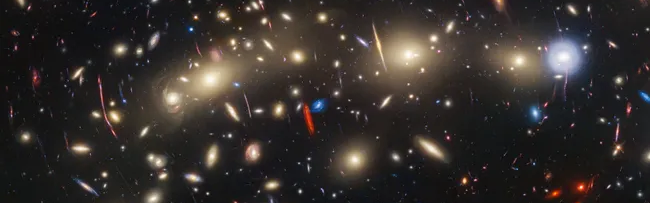
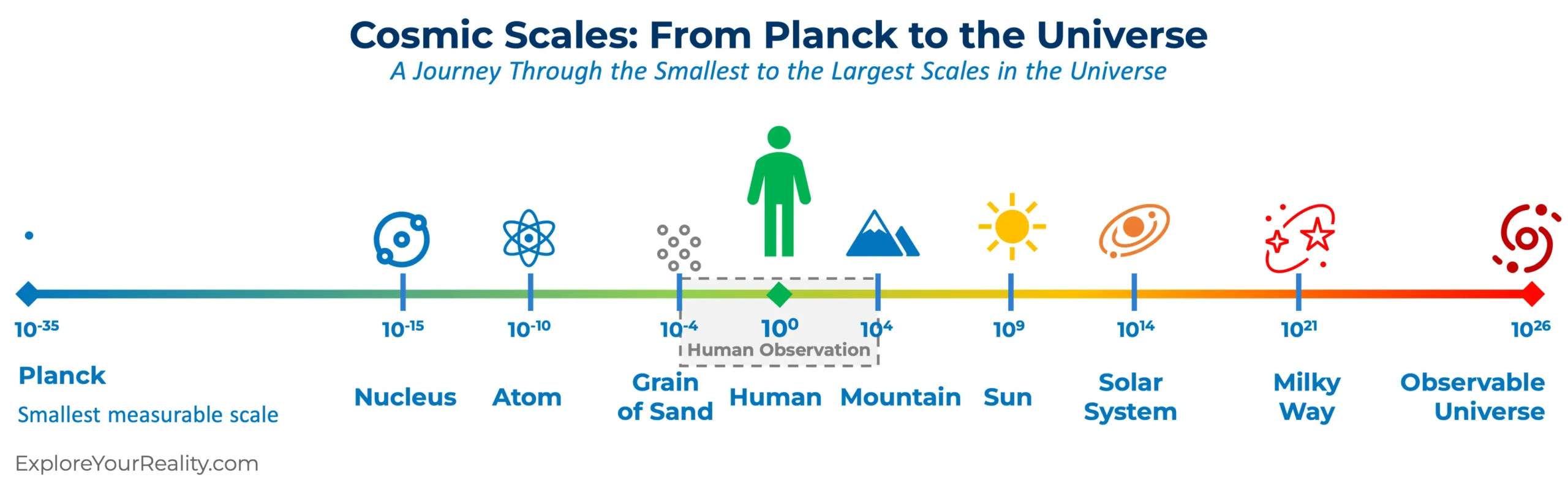
In the structure of our world, there always seems to be a bigger entity to witness. If you expand your view from atoms, molecules appear. After them, chemicals, and after those, cellular structures. Cells give rise to more complex patterns of life where the subfunctions of an organism can be delegated, so more important functions can be overseen more directly. Once a fully sustainable individual is created, collaboration can occur either to grow the species further or develop infrastructure to support that species. Simpler infrastructure begets its more complex cousins. All the way from the smaller components of reality to our perspective, each layer builds upon the last while being all but fully independent of what came before it. Moreso, each layer can achieve goals and navigate the world on a scale unimaginable for any individual part within it. This point is not just illustrative of life; the analogy can be continued forward towards celestial and quantum structures, chemical cycles in our atmosphere, geology, and even human history.
What clearly comes into focus is this: everywhere in nature, the one constant is the emergence of new structure from the collection of base components. Any object is both a product of its components and a newly expressed direction that would otherwise be unseen at the base component level. Building each layer inherently adds a backbone to the system that wouldn’t appear otherwise. This structure allows for continuous growth, from the invisible atom to the grand dance of supernovas. Perhaps this structure in the universe isn’t all too peculiar. After all, almost all the universe can be reduced to a description of a finite number of interactions, transition points along finite time. Maybe we can find beauty in the way things are, precisely because its systematic nature is not unhuman-like, in a way. Maybe we can find elegance in it because it acts as a mirror to our own understanding of the world.
-JRW